
The screen is the easy part
Anyone can rent you panels. What decides whether a wall looks right is everything around it — the processor, the content pipeline, how the frame is rigged, where the power comes from, and whether someone competent is sitting behind it when the room fills up.
We own our walls, we build them with our own crew, and the person who programmed the show is the person standing there during it.
- Indoor and outdoor panels, sized to the room and the viewing distance
- Ground-stacked, flown, or on a frame built for the shape
- Processing, scaling and switching, with a backup path
- Playback, confidence monitors and camera feeds
- Content specs given to your designer in advance, in pixels
- An operator who has run this before
Where they go
Three jobs a wall does
Corporate and general session
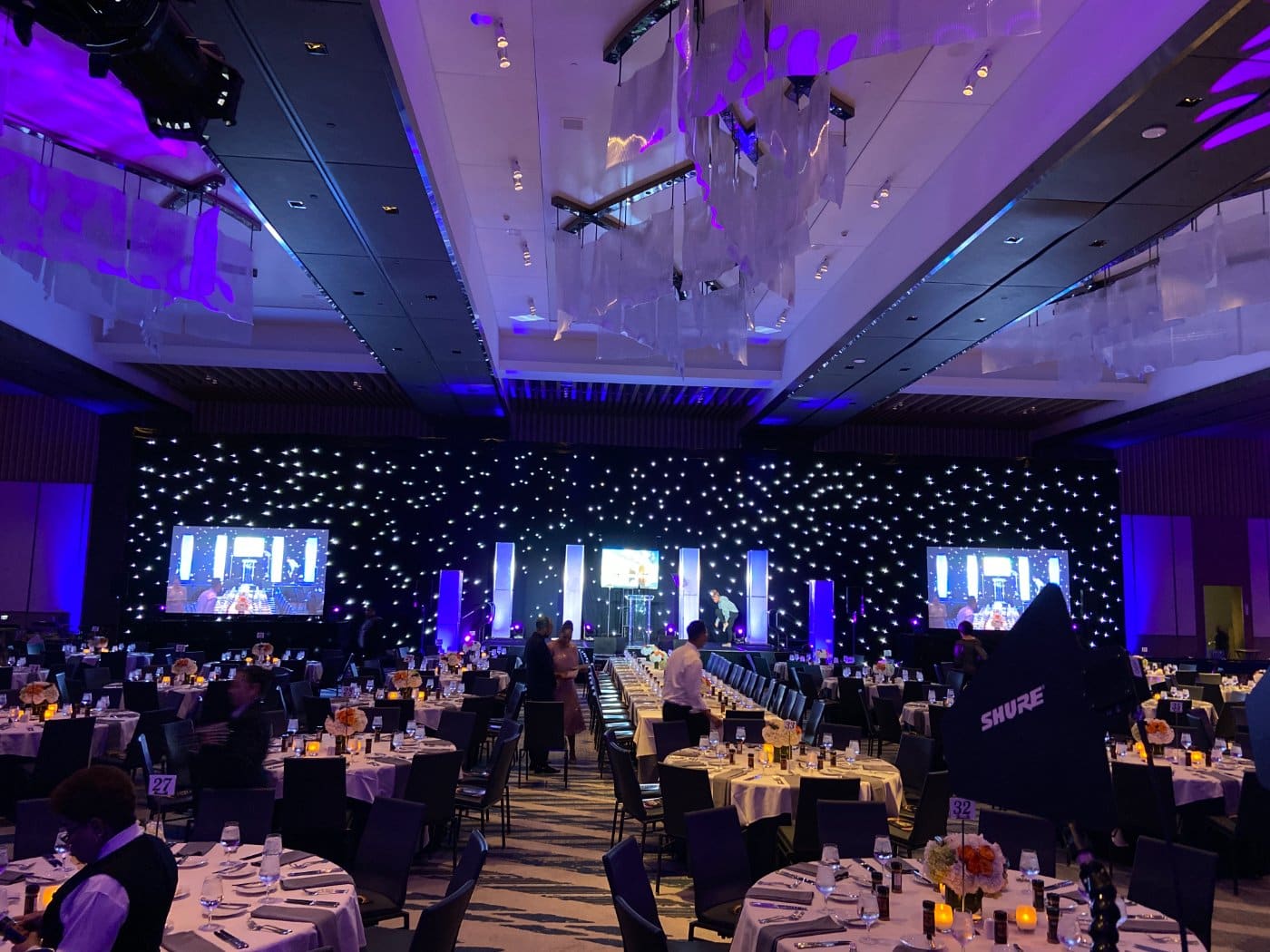
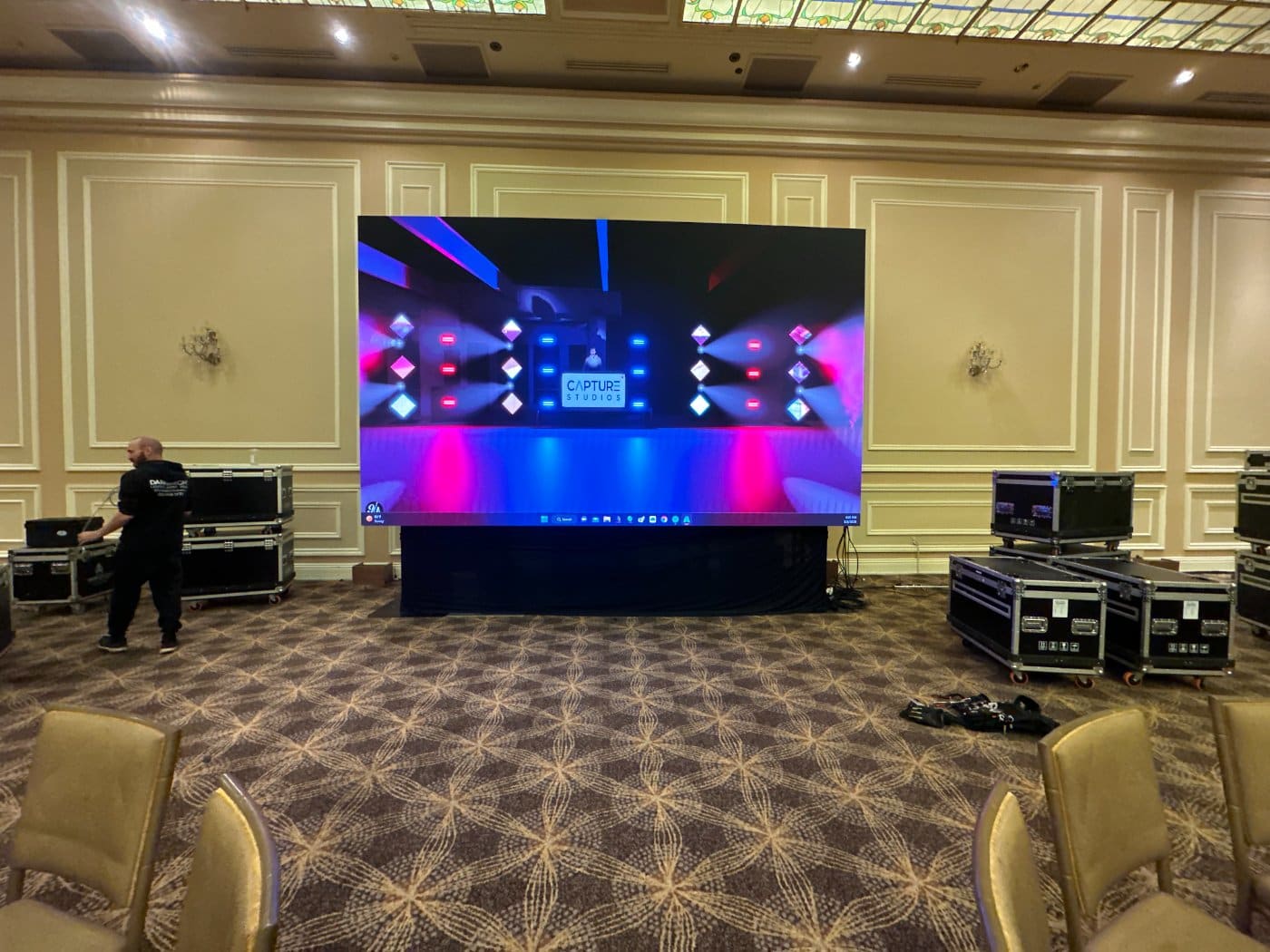
A wide wall behind the stage that keeps slides legible from the back of a ballroom, with confidence monitors so your presenter is not turning round to read their own deck. Switched cleanly between decks, video and a camera feed.
Concert and festival
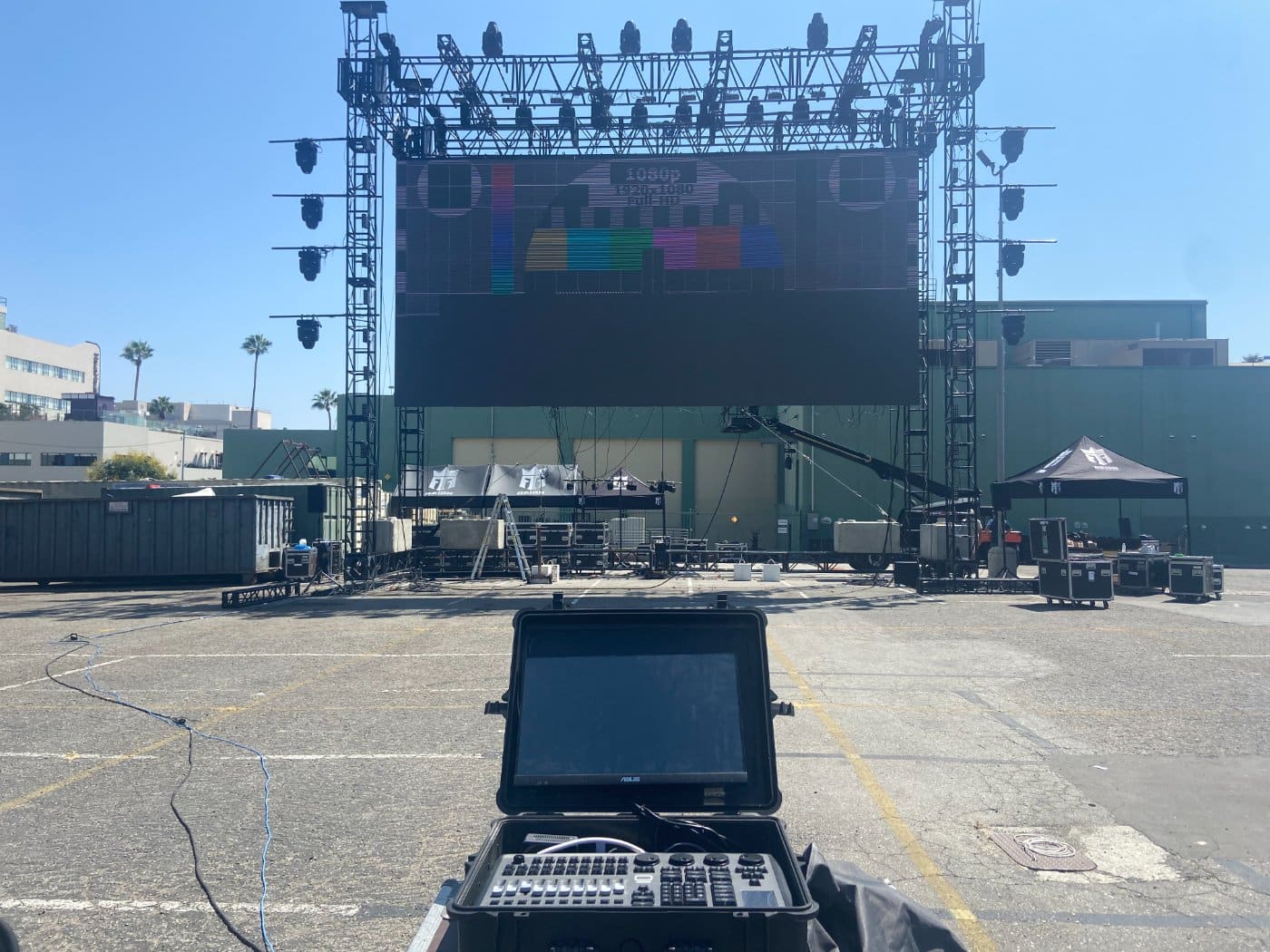
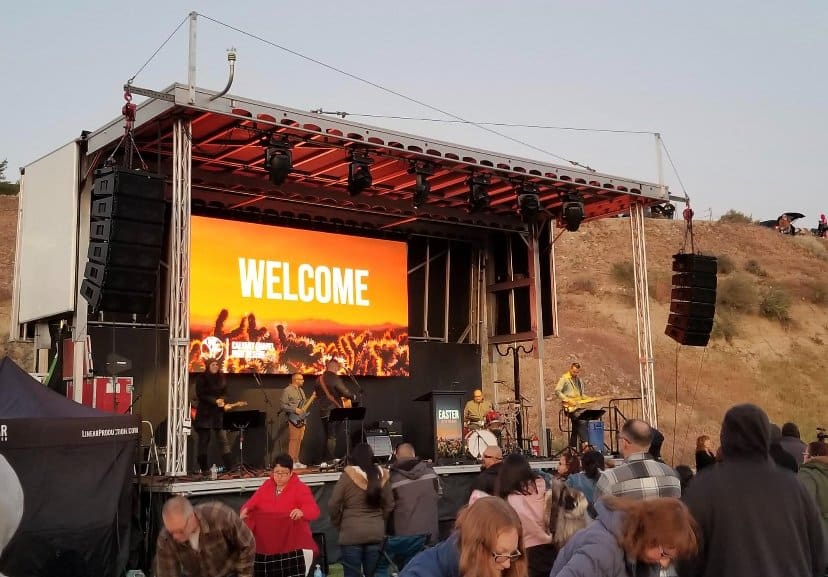
Upstage walls and side screens that survive a full show and a load-out in the dark. Ground-stacked or flown off the same truss as the lighting, fed by playback or camera, and bright enough to hold up under a wash rig.
Brand activation and outdoor
Weather-rated panels for daylight, built to a shape rather than a rectangle when the design calls for it. These are the ones where wind loading and ballast decide the build, not the picture.
What we will ask you
Five things decide the whole quote, and none of them is the screen size you first had in mind.
- How far away the nearest and the furthest guest will be
- Indoors, outdoors, or outdoors in daylight
- What the ceiling or the ground will actually carry
- Where power is, and whether it is clean
- What is going on the screen, and who is making it
Answer those and the wall almost specifies itself. Guess at them and you get a number that changes on site, which helps nobody.
Walls we have built
Recent work
Questions we get asked
What size LED wall do I need?
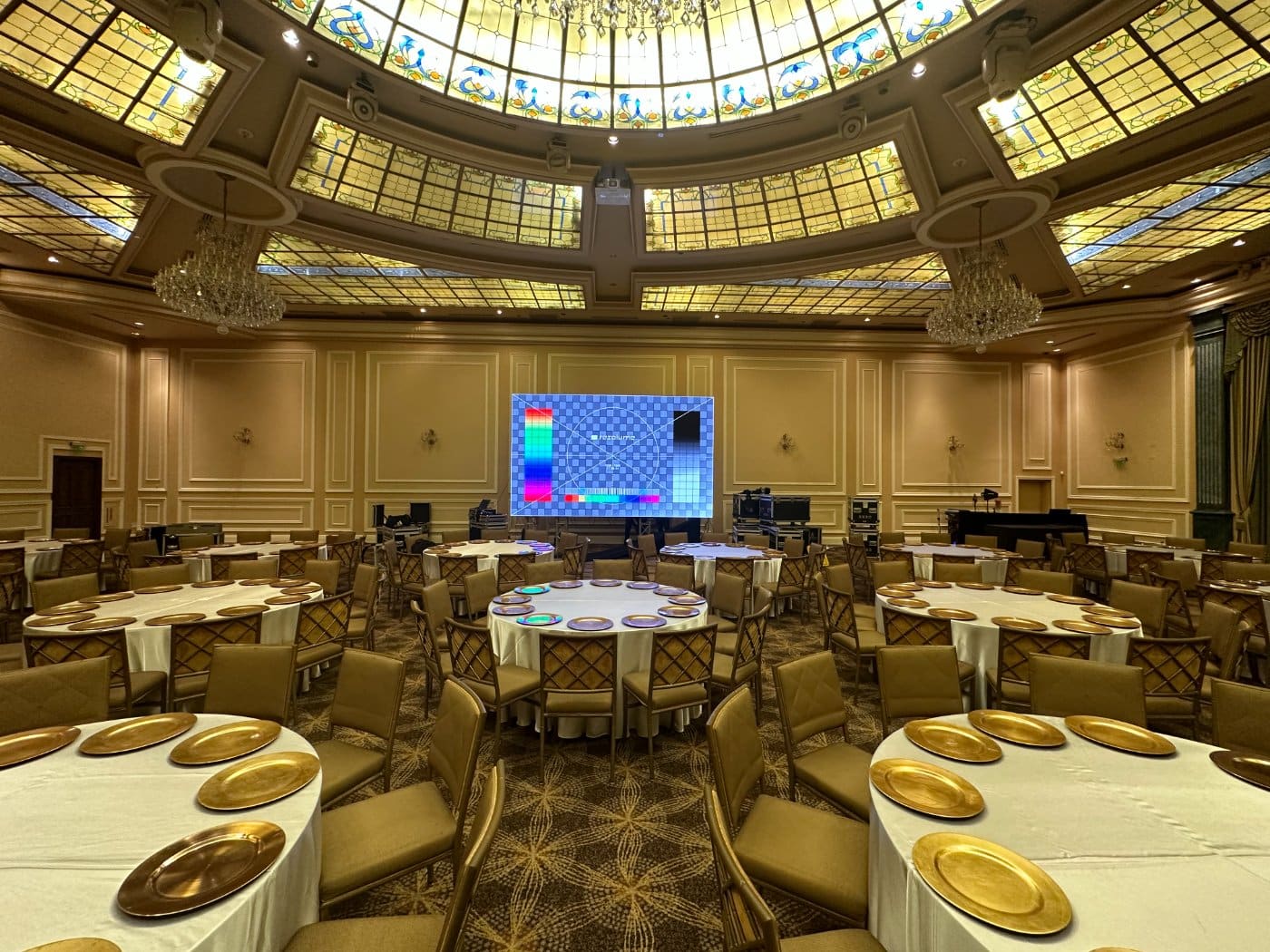
It is set by the room, not by the budget. A wall has to be readable from the back row and in proportion to the stage — in a hotel ballroom that is usually somewhere between 12 and 24 feet wide. Send us the room and we will draw it to scale before you commit to anything.
What is pixel pitch, and does it matter?
Pixel pitch is the distance between LEDs, in millimetres. A smaller number means a sharper image close up, and a higher price. What actually matters is how far away your nearest guest is: at 15 feet a fine pitch earns its money, at 40 feet nobody can tell. We pick the panel to the viewing distance rather than selling you the smallest number.
Can an LED wall go outdoors?
Yes. Outdoor panels are weather-rated and far brighter, because they are competing with daylight. The real constraints outside are wind loading and ballast — a wall is a sail, and it has to be engineered for the site.
Do you supply the content and run it?
We supply the processing, playback, switching and an operator. You can hand us slides, video, a live camera feed or all three. We will give your designer the exact pixel dimensions to build artwork to, well before show day.
Can you install a permanent wall?
Yes. That is the installs side of the business — restaurants, sports bars and churches, wired in and left running.
Send us the room
Give us the venue, the date and roughly what is going on the screen. We will come back with a wall sized to the room, drawn to scale, and a number that holds.